
To really understand the hype around the beloved handbags with the double C design, you need to know the full history of Coach bags. This brand has been around for decades and continues to grow in popularity due to its superior craftsmanship and classic style.
History of Coach Handbags
Look around, and you'll likely see women carrying Coach handbags or accessories wherever you go. Though you may own a Coach bag or at least recognize the brand, you may not know the story behind it. Coach has a rich history and tradition in the world of handbags begging to be explored.
1940s Origins

Coach has a rich history that dates back to 1941. They were founded under the name Manhattan Leather Bags by Lillian and Miles Cahn. The company founder became impressed by the design of a baseball glove, and it inspired him to create a handbag with similar attributes.
Working with six artists, he created a collection consisting of 12 handbags. Like a baseball glove, these bags were made from tan, supple, high-quality leather and featured excellent stitch work and craftsmanship.
The Coach logo is an emblem of a horse and carriage, which was introduced in the 1950s.
The Age of Bonnie Cashin
In 1962, the Coach company hired Bonnie Cashin. Cashin breathed new life into the company. She was considered a pioneer in American sportswear due to her use of industrial hardware and organic materials such as leather, wool, and jersey. Cashin is credited with both the brass toggle hardware on Coach bags and the Coach duffle bag.
The Cashin motto was to "make things as lightweight as possible, as simple as possible, as punchy as possible, as inexpensive as possible." This meant that her debut collection came in classic, simplistic designs, but the colors were exuberant. Handbags were frequently produced in bright, color-popping hues, such as brick red, pastel pink, mustard yellow, and grass green. The interiors were made up of striped madras cotton, which soon became her trademark.
Filling the Affordable Luxury Handbag Niche

In 1979, Lew Frankfort, who later served as Coach's CEO until 2013, joined the company. Frankfort transformed Coach from a little-known leather goods manufacturer to a world-renowned brand. He is often credited with the emergence of Coach in the 1990s as the affordable luxury brand. This concept of affordable luxury was a big deal in the industry.
Up until this point, a woman's only handbag choices were high-end designer bags or department store knockoffs. The new Coach bags filled a void in the market. Shortly after Frankfort joined the company, Coach published its first catalog and launched its first flagship store at 754 Madison Avenue in New York.
The catalog and the flagship store were necessary steps in turning Coach into a fashion brand, not just a leather manufacturer. Suddenly, Coach was a far cry from the company that made bags like baseball gloves.
In 1985, Coach became part of Sara Lee, giving the little company some much-needed capital and infrastructure support. However, in 2000, the company spun off from its parent in a public offering on Wall Street.
Expansion of the Line
Starting in the late 1980s, Coach began a series of expansions and innovations that have made its brand strong, fresh, and relevant. In 1988, the company launched a collection of men's and women's watches. The company also expanded to Tokyo in the early 1990s. Today, Japanese sales account for a healthy percentage of the company's revenues. Just a few years later, in 1992, the company entered the outerwear business with classic trenches and raincoats.
Then, in 1993, the company hired Reed Krakoff, a sportswear designer who had worked at Tommy Hilfiger. Like Cashin before him, Krakoff brought a unique vision to the collection. He is credited with changing the image of Coach from a sturdy, basic collection of tan, burgundy, black, and navy briefcases, to a more hip, stylish collection with new colors and styles every season.
Krakoff added interesting new accessories including watch straps, wallets, wristlets, and cell phone cases.
Coach Signature Collection

The turn of the century brought even more interest in Coach. In 2000, the company launched what has become an iconic look, the Coach Signature collection. This collection features a bold double C design. The collection was timed to capitalize on a logo mania sweeping the fashion industry, and the signature collection was done in a wide variety of styles and colors.
In 2006, in honor of the company's 65th anniversary, Krakoff debuted the Legacy collection. The Legacy collection incorporated suede and canvas into the designs. In a bold move, Krakoff added bright new colors like pink, green, and orange.
Today's Outlook
Coach has over 950 stores worldwide that are directly operated by themselves, as well as additional boutiques within select department stores and outlets. The company is considered a global leader in luxury handbags and accessories.
Their online store also distributes to over 20 countries around the globe, which means that Coach handbags are accessible on five different continents.
Most Popular Coach Handbag Styles
Some of Coach's most iconic vintage designs are still known and loved. See what some of the most popular styles of all time include.
The Duffle
Perhaps the most iconic Coach design of all time, the Duffle was produced in 1971 and then appeared in American Vogue the very same year. Its soft, slouchy silhouette was a hit with fashion editors and consumers alike — and still is, decades later.
The Saddle Bag
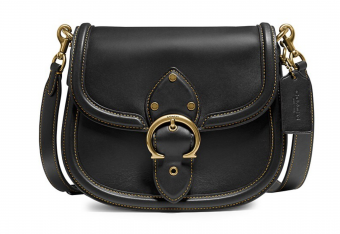
This design became the official United Airlines Stewardess bag in the 1980s, after its initial conception in 1972. Adored by many for its many flaps and compartments, the Saddle Bag has been an inspiration to countless handbag brands over the years, including Coach themselves. Their 2016 Saddle Bag was a best seller.
The Dinky

This little bundle of joy was the brainchild of Bonnie Cashin. She designed the original turn-lock in 1964 before it made it onto a Coach handbag in 1973. The Dinky is described as "the little bag that could" and is loved universally worldwide.
The Slim Satchel
This handbag originated in 1974 and is known for its distinctive structured handles, as well as curved side binding. The Slim Satchel was one of the first styles designed for use by both genders, ahead of the brand's iconic briefcases.
The Tabby Shoulder Bag
The Tabby shoulder bag is the revival of a classic Coach design from the 1970s. It features the classic silhouette that Coach enthusiasts have come to love but with several modern twists. It has convertible straps and comes in tons of different materials, including a fuzzy shearling fabric. The Tabby design we know today was released in the Fall of 2019 and remains a favorite.
Highlights of Coach Purse History
Today, Coach is a booming global leader, but we'll never forget their humble beginnings in 1941. It's fun to learn the history of where each small detail originated, like the double C design or the turn-lock closure. The next time you look at your Coach bag, you'll have a greater appreciation for it, and can even share some fun facts with friends when they reach into theirs.


